- Police Record Deletion
-

 6 min read
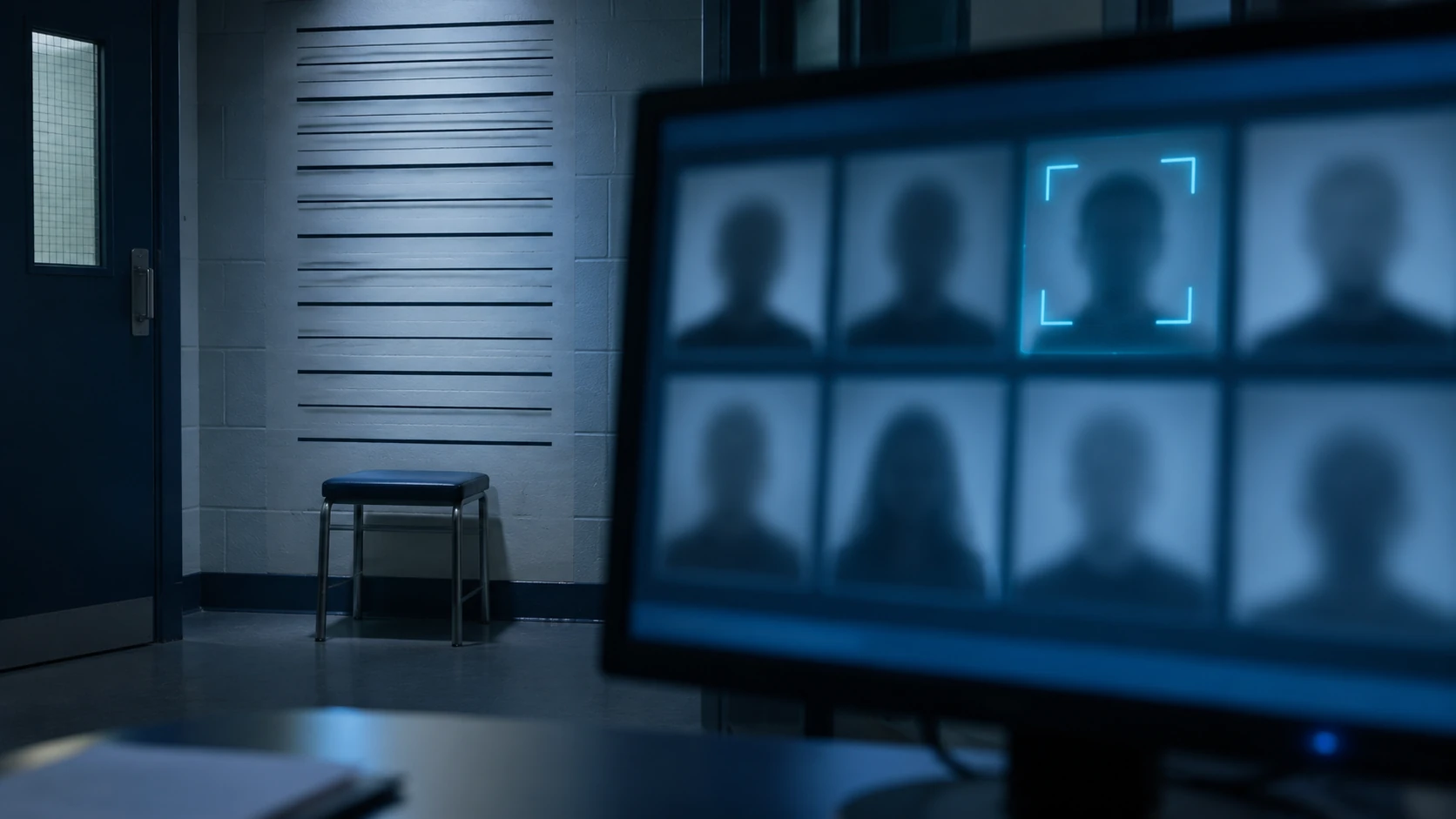


If you have ever been arrested in England or Wales, the police almost certainly took your photograph in custody, and the chances are they still have it, even if you were never charged, the case was dropped, or you were acquitted. On 4 November 2026 the Home Office announced plans for a new statutory framework governing police facial recognition, with an independent regulator and a new code of practice. At the same time, press reports revealed that forces are running facial recognition searches against custody image databases containing photographs that should have been deleted long ago. Merseyside Police alone was reported to be holding around 300,000 custody images overdue for deletion.
Photographs of innocent people, people whose cases ended in no further action, and people with long-spent cautions are sitting on police systems and are now being swept into facial recognition searching. If that includes you, there is something you can do about it. It needs to be done properly, though, and it is rarely just about the photograph.
What Is a Custody Image, and Why Do the Police Still Have Yours?
A custody image is the photograph taken when you are booked into a police station after arrest (what most people would call a mugshot). It is created automatically, whatever the eventual outcome, and it does not sit on its own. It forms part of a wider police record generated by the arrest: an entry on the Police National Computer (PNC), an event record on local force systems and the Police National Database (PND), and in many cases fingerprints and a DNA profile taken at the same time.
Your custody photograph exists because you have an arrest record. If you accepted a caution, the photograph sits alongside that caution. If you were released with no further action, charged but acquitted, or had the case against you discontinued, the image remains attached to a record of the allegation, and you may not even realise that record still exists.
The law also treats the different parts of that record differently. DNA and fingerprints are governed by a strict statutory deletion regime under the Protection of Freedoms Act 2012, so for most people who are not convicted they are removed automatically. Custody photographs are not covered by that regime. They are retained under police policy, and in practice forces hang on to them, including images of people who were never convicted of anything.
Deletion Is Not Automatic, and the Courts Have Already Said Retention Can Be Unlawful
As long ago as 2012, the High Court held in RMC and FJ v Commissioner of Police of the Metropolis that the blanket retention of custody photographs of unconvicted people was unlawful. More than a decade later, the problem has not been fixed. Successive Biometrics and Surveillance Camera Commissioners criticised the approach, and the Merseyside figures show the scale of what is still sitting on force systems.
The police will not come to you. There is no routine process by which a force reviews your custody image and decides, unprompted, that it should go. Images of unconvicted people are deleted when someone makes the police delete them, and whether an application succeeds depends heavily on how the case is put, what records it covers, and the basis on which deletion is argued. Applications that are poorly framed, incomplete, or aimed at the wrong records are routinely refused, and a refusal can make a later, better-prepared application harder.
Facial Recognition Raises the Stakes
Until recently, an old custody photograph was a dormant record: objectionable in principle, but unlikely to affect your life. Facial recognition changes that. Police forces now run retrospective facial recognition searches against custody image databases as a matter of routine, and live facial recognition deployments are expanding across England and Wales. The Metropolitan Police alone reported hundreds of arrests from live facial recognition in a single year.
Every search is run against the images the police hold. If your photograph is in the database, your face is in the line-up for every search, indefinitely. Facial recognition systems produce false matches, and the consequences of being wrongly flagged are borne by the person whose image should never have been retained in the first place. The government’s new framework may eventually impose better rules on how these systems are used, but it will not take your photograph out of the database. Only deletion does that.
The same arrest that produced your custody image may also still be visible in other ways: on an enhanced DBS check as police intelligence, in response to vetting enquiries, or on international travel checks. Dealing with the photograph but leaving the underlying arrest or caution record untouched solves only part of the problem, and sometimes the least important part.
The Right Way to Approach It: Custody Image, Arrest Record and Caution Together
Because a custody photograph is one part of a wider record, the effective approach is almost never a standalone request about the image. A properly prepared application addresses the arrest record, any caution, and the associated biometric material and photographs as a single exercise, so that what comes off the police systems is the record as a whole, not one fragment of it with the rest left behind to resurface on a DBS check or a facial recognition watchlist years later.
Getting that right involves a number of judgments that depend on the facts of each case: which records each force and national system actually holds, the correct legal basis for seeking deletion of each element, how the circumstances of the arrest or caution should be presented, and how to respond if a force resists. Cases involving cautions add a further layer, because a caution is an admission with its own disclosure consequences, and the grounds on which cautions and the records attached to them can be removed are narrow and fact-specific. We advise on each of these points before any application is made.
We act for clients across England and Wales in precisely these cases: removing custody images, arrest records, cautions and other non-conviction records from police systems, and dealing with the DBS and vetting consequences that flow from them. We know what forces hold, what they will accept, and how to put the case.
Find Out What the Police Hold on You and Get It Removed
If you were arrested and never convicted, accepted a caution you now regret, or simply want to know whether your photograph is sitting in a facial recognition database, speak to us. We will establish exactly what records the police hold about you, advise on whether they can be removed, and handle the application from start to finish.
Contact Legisia Legal Services for a confidential consultation about custody image, arrest record and caution deletion.
Share this Post, Choose your platform!

Matt is a Solicitor Advocate and Director of Legisia Legal Services. He specialises exclusively in police record deletion, DBS appeals, and regulatory defence. With over 20 years of experience, he has advised hundreds of professionals and individuals on high-stakes matters affecting careers, reputations, and legal standing. His work focuses on challenging unlawful data retention, safeguarding thresholds, and procedural breaches across UK policing and disclosure systems.
Matt is a Solicitor Advocate and Director of Legisia Legal Services. He specialises exclusively in police record deletion, DBS appeals, and regulatory defence. With over 20 years of experience, he has advised hundreds of professionals and individuals on high-stakes matters affecting careers, reputations, and legal standing. His work focuses on challenging unlawful data retention, safeguarding thresholds, and procedural breaches across UK policing and disclosure systems.
Disclosure & DBS: the complete CPD course for professionals
Written by a solicitor who handles these cases every day. For HR, compliance, safeguarding and legal professionals who make decisions about police records and DBS disclosures.
- Eleven modules covering disclosure, DBS checks, barring, regulatory interface and employment decisions
- The only UK course that also covers how UK records affect work, travel and employment abroad
- CPD-accredited, with written feedback on a final applied-scenario exercise
- Waitlist members get 20% off and a sample module ahead of launch
We'll email you the checklist and news about the course launch – nothing else. See the full course →