Bank Executive Removes Shoplifting Caution

The Situation:
What Our Client Was Facing
Our client was a senior banking professional at the time the caution was issued. He had never seen himself as someone who would face police action, let alone a dishonesty-related allegation capable of damaging both his reputation and his career.
The incident arose after he absentmindedly walked out of a shop with items still in his bag without paying for them. He maintained from the outset that this had been an honest mistake, not a deliberate act of theft. He was stopped on the way out, arrested, and taken to the police station.
In interview, he initially denied any dishonest intent and explained that he had simply made a mistake. But after being left in a cell and then taken back for further questioning, the pressure intensified. He later said he was made to feel that no one would believe him, that court was inevitable if he did not accept the caution, and that the easiest way out was simply to give in.
He ultimately accepted the caution. But as our guide on when a police caution can be deleted explains, the real issue in cases like this is whether there was ever a proper informed admission in the first place, and whether the process was administered fairly and lawfully.
The consequences were obvious. A shoplifting caution is not a harmless warning, especially for someone in a senior regulated and trust-based role, regulated by the Financial Conduct Authority (FCA) and the Prudential Regulation Authority (PRA) . If left on record, it had the potential to cause serious professional and reputational damage.
NEED HELP WITH A SHOPLIFTING CAUTION ACCEPTED UNDER PRESSURE?
Our Approach:
How We Challenged the Caution
We approached the case as a classic unsafe-caution matter. The issue was not simply that the caution was embarrassing or career-damaging. The issue was that the process by which it had been accepted was fundamentally unreliable.
- We analysed the interview history carefully: The first interview showed our client denying dishonest intent and maintaining that the incident had been an honest mistake. That initial position mattered because it showed the later admission had not been the natural starting point of the case.
- We examined what happened between interviews: There was a clear shift between the first denial and the later acceptance. We were able to show that this change came only after he had been left in a cell and then returned to interview under increasing pressure.
- We gathered evidence of vulnerability and strain: We obtained evidence showing that he had been under significant psychological pressure at work and was also dealing with difficulties in his personal life. That supported the credibility of his explanation and helped explain why the process had become unsafe.
- We reviewed custody material showing pressure: Evidence from within the custody suite supported the case that officers had been pressuring and intimidating him into accepting the caution rather than allowing a fair and informed decision.
- We prepared structured legal representations: We made focused submissions that the caution had been accepted under pressure, that the process had been improperly handled, and that the resulting record should not remain on the Police National Computer.
This was not a case where someone had simply changed their mind later and regretted accepting a caution. It was a case where the original denial, the intervening pressure, and the surrounding evidence all pointed to an unsafe disposal that should never have remained on record.
The Outcome:
How Legisia Protected & Reinstated Client's Life
The caution was deleted from the Police National Computer. That removed a record which should never have remained in place once the circumstances of the admission and the wider evidence were properly examined.
For our client, the result was critical. It meant that a one-off incident, followed by a caution accepted under pressure, could no longer damage the professional reputation he had spent years building, and he was able to remain in his senior banking role.
Instead of being permanently defined by a caution accepted in custody under pressure and intimidation, he was able to move forward without the wrongful record continuing to follow him.

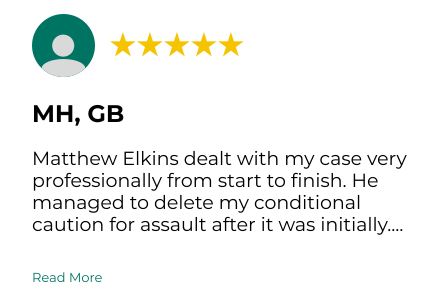
Words From Those We’ve Helped.
Discover why clients in the UK and around the world continue to place their trust in us.






















Why This Case Mattered — and What Others Can Learn
This case shows why police cautions should never be judged only by the fact that someone signed a caution form. A caution may appear valid on paper, but still be unsafe if the person first denied the allegation, was put under pressure, and then caved only because they felt bullied into accepting it.
It also shows why supporting evidence matters. The combination of the first interview, the custody sequence, and evidence of mental strain made it possible to show that this was not a free, clear and reliable admission. Where a caution has been obtained in that kind of way, deletion may be the right outcome.
If you accepted a caution after pressure in custody, Legisia’s Police Caution Removal service can assess whether there is a realistic basis to challenge it.
Q&A
Can a shoplifting caution be removed if it was accepted under pressure?
Potentially, yes. If the caution followed intimidation, improper pressure, an unsafe interview process, or no proper informed admission, there may be grounds to seek deletion under the Record Deletion Process. There may also be public interest grounds for deletion.
Does it matter if I first denied the allegation and only admitted it later?
It can matter a great deal. Where someone initially denied dishonest intent and only accepted the caution after time in custody and mounting pressure, that sequence may support the argument that the later admission was not truly safe or reliable.
Explore real stories of individuals just like you who turned to us at pivotal moments and how our timely legal intervention helped protect their future, dignity, and livelihood.