-

 3 min read




What Happens If Your ICPC Affects a Job Offer?
If your International Child Protection Certificate (ICPC) contains cautions, allegations or other police information, it can cause concern — particularly where an overseas job offer depends on it.
Importantly, the ICPC is issued to you first. This means you have control over what happens next.
Who Receives the ICPC First?
An ICPC is issued directly to the applicant, not the employer. You review the certificate before deciding whether to provide it to the overseas organisation.
This stage is critical. Decisions made here can materially affect your employment outcome.
Your Options After Receiving the ICPC
If the certificate contains information you were not expecting, you may have several options:
- Provide the certificate with a structured explanation
- Delay disclosure while seeking advice
- Challenge the disclosure decision
- Apply to delete an eligible police caution
- Withdraw from the process
The appropriate strategy depends on the nature of the disclosure and the urgency of the employment situation.
When a Disclosure Challenge May Be Appropriate
If the certificate includes non-conviction information — such as arrests or allegations — it may be open to challenge where it is inaccurate, misleading or disproportionate.
See our detailed guide to challenging ICPC disclosure decisions.
When Police Caution Deletion May Be the Better Route
If the issue is a recorded police caution, and it remains on police systems, it will appear on the ICPC. In those circumstances, deletion from police records may be the more durable solution.
Read more about deleting a police caution before applying for an ICPC.
When Should the Employer Be Involved?
In many cases, it is sensible to assess the disclosure and consider your options before providing the certificate to the employer.
If disclosure is inaccurate or potentially challengeable, resolving that issue first may avoid employment consequences altogether.
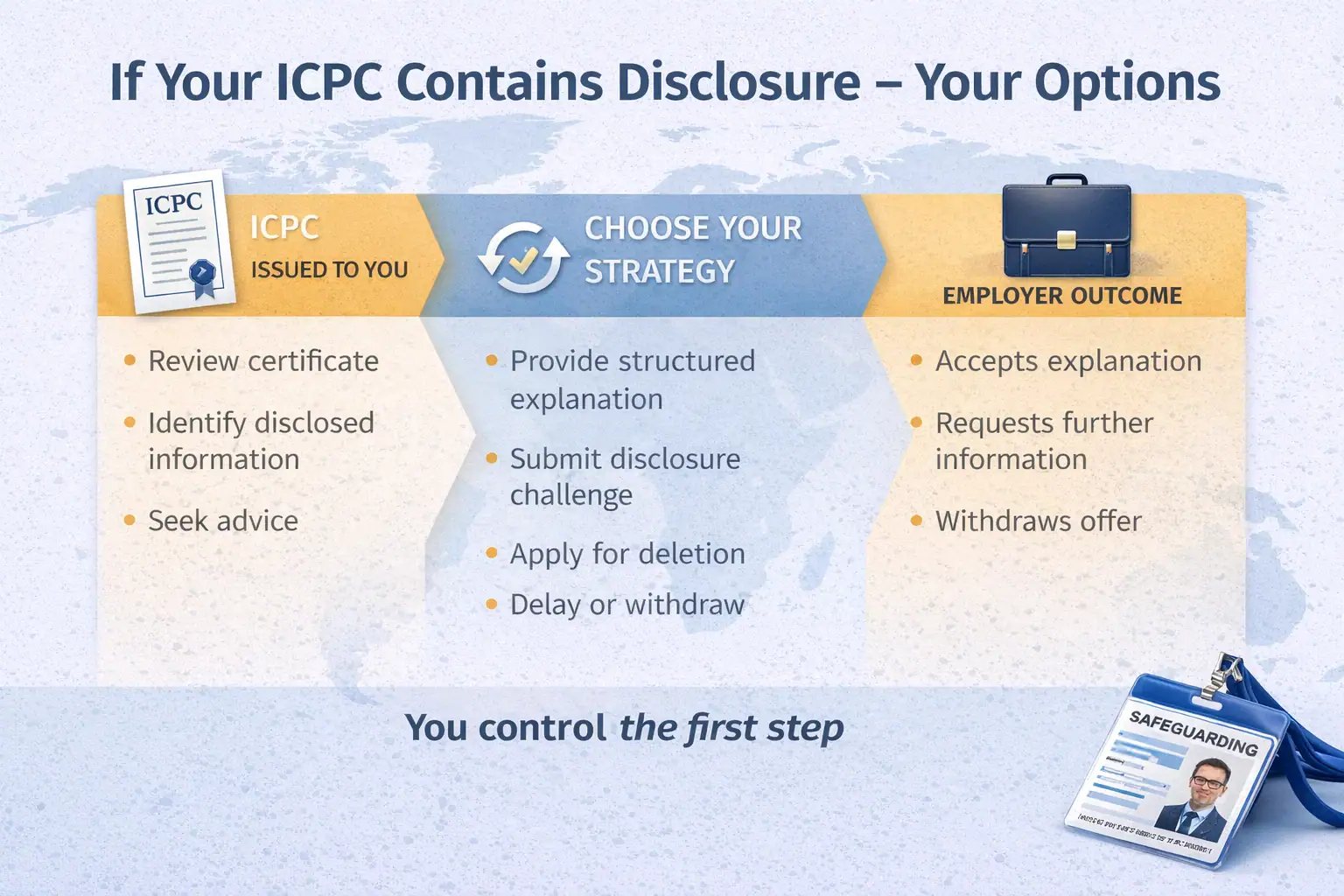
You control the first step: After receiving your ICPC, you decide whether to disclose, challenge, seek deletion, or withdraw.
What If the Offer Is Withdrawn?
Some employers adopt a cautious approach and may withdraw an offer upon seeing disclosed information. However, this does not prevent you from:
- Challenging disproportionate disclosure
- Applying for deletion of eligible cautions
- Reapplying once the underlying issue is resolved
The focus should be on addressing the root cause rather than reacting emotionally.
How Legisia Can Help
Legisia advises individuals whose overseas employment has been affected by ICPC disclosure.
- Realistic assessment of your position
- Strategic advice before employer disclosure
- Structured challenge representations
- Police caution deletion applications
- Planning for reapplication where appropriate
If your role depends on a clear certificate, timely advice can materially improve your position.
Frequently Asked Questions
Does the employer receive my ICPC automatically?
No. The ICPC is issued to you first. You decide whether and when to provide it to the employer.
Can I delay giving the certificate to the employer?
In many cases, yes. Seeking advice before disclosure may allow you to consider challenge or deletion options.
If I challenge the ICPC, do I have to tell the employer?
That depends on timing and contractual requirements. In some cases it is prudent to resolve disclosure issues first.
Can I reapply for an ICPC after deletion or successful challenge?
Yes. If the underlying issue is resolved, a future application should reflect that change.
Speak to Legisia
If your ICPC may affect an overseas job offer, contact Legisia for confidential advice. We can assess your options and advise on the most effective strategy.
Share this Post, Choose your platform!

Matt is a Solicitor Advocate and Director of Legisia Legal Services. He specialises exclusively in police record deletion, DBS appeals, and regulatory defence. With over 20 years of experience, he has advised hundreds of professionals and individuals on high-stakes matters affecting careers, reputations, and legal standing. His work focuses on challenging unlawful data retention, safeguarding thresholds, and procedural breaches across UK policing and disclosure systems.
Matt is a Solicitor Advocate and Director of Legisia Legal Services. He specialises exclusively in police record deletion, DBS appeals, and regulatory defence. With over 20 years of experience, he has advised hundreds of professionals and individuals on high-stakes matters affecting careers, reputations, and legal standing. His work focuses on challenging unlawful data retention, safeguarding thresholds, and procedural breaches across UK policing and disclosure systems.