-

 8 min read
 -
 1.6K views
 -
 1.2K shares






International Child Protection Certificates (ICPCs) and Police Disclosure
If you are applying to work or volunteer with children overseas, you may be required to obtain an International Child Protection Certificate (ICPC) from the ACRO Criminal Records Office.
For many applicants, the key concern is not the application itself — but what will be disclosed.
Will a police caution show on an International Child Protection Certificate (ICPC)?
Yes. ICPCs typically disclose all convictions and cautions because no DBS-style filtering applies. That means a caution can appear even if it is spent or would be filtered on an Enhanced DBS check.
What does an ICPC disclose?
An ICPC can disclose (1) convictions, (2) cautions (no filtering), and (3) relevant non-conviction police information where considered necessary and proportionate for safeguarding.
ICPC vs Enhanced DBS (quick difference):
- ICPC: Shows all convictions and cautions (no filtering) and may include relevant non-conviction information for safeguarding roles abroad.
- Enhanced DBS: Applies filtering rules and may still include relevant non-conviction information for UK safeguarding roles.
What Is an International Child Protection Certificate?
An International Child Protection Certificate (ICPC) is a criminal record check issued by ACRO Criminal Records Office in partnership with UK policing bodies. It is designed for:
- UK nationals working with children abroad
- Former UK residents seeking safeguarding roles overseas
- Teachers, charity workers and volunteers in international settings
It exists because overseas employers do not have direct access to UK criminal record systems. The ICPC provides them with safeguarding-focused disclosure.
For ACRO’s official guidance, see
ACRO’s International Child Protection Certificate guidance.
What Does an ICPC Disclose?
Convictions and Cautions – No Filtering Applies
ACRO does not apply the DBS filtering model when issuing an International Child Protection Certificate.
This means:
- All convictions recorded on the Police National Computer will be disclosed
- All cautions, warnings and reprimands will be disclosed
- Spent cautions will still be disclosed
- Protected cautions under DBS rules will still be disclosed
If you have received a police caution — regardless of age — it will appear on your ICPC.
Non-Conviction Police Information
An ICPC may include relevant non-conviction information where police consider disclosure necessary and proportionate for safeguarding purposes.
This may include:
- Arrest records
- Allegations not resulting in charge
- Ongoing investigations
- Local police intelligence
ICPC vs Enhanced DBS – Key Disclosure Differences
Enhanced DBS
- Applies statutory filtering rules
- Removes certain old and minor cautions/convictions
- May include relevant non-conviction information
- Applies to UK safeguarding roles
International Child Protection Certificate
- Shows all convictions and cautions (no filtering)
- May include relevant non-conviction information
- Applies to safeguarding roles abroad
- Includes a children’s barred list check
An ICPC therefore frequently discloses much more historical information than an Enhanced DBS certificate.
ICPC vs ACRO Police Certificate – Important Distinction
An ICPC is different from an ACRO Police Certificate (used for visas and immigration). A Police Certificate will apply a step-down disclosure model over time. An ICPC does not. If your role involves safeguarding children abroad, the ICPC disclosure standard is therefore much stricter.
Can You Remove a Caution Before Applying for an ICPC?
In some cases, yes.
If a caution was unlawfully issued, improperly administered, inaccurate, or disproportionate, or if it’s in the public interest to do so, it may be possible to apply for deletion from the Police National Computer.
If successfully deleted, it should not appear on your ICPC.
Learn more about our police caution deletion services.
Challenging ICPC Disclosure
If an International Child Protection Certificate has already been issued and includes information you believe should not have been disclosed, you may request a formal review.
However, disclosure decisions are made using safeguarding and proportionality tests. Simply disagreeing with the outcome is rarely enough to secure removal. The reviewing authority will consider the relevance of the information to child protection, the seriousness of the allegation or incident, and the necessity of disclosure in safeguarding contexts.
A challenge may succeed where:
- The information is factually inaccurate
- The record relates to the wrong individual
- The disclosure is disproportionate to the safeguarding risk
- Important contextual or mitigating evidence was not considered
Effective challenges typically require structured legal representations addressing accuracy, relevance, necessity and proportionality. This often involves analysing police decision-making, reviewing underlying records, and presenting detailed written submissions.
At Legisia, we assist clients by assessing the strength of a potential challenge, identifying weaknesses in the disclosure decision, and preparing comprehensive representations designed to maximise the prospect of removal or amendment.
If you are concerned about information disclosed on your ICPC, early advice is strongly recommended.
Why This Matters
- Disclosure may prevent overseas employment
- It may affect visa applications
- It can impact professional reputation
Proactive legal advice before applying can significantly reduce risk.
Key Takeaways
- ICPCs disclose all convictions and cautions because no DBS filtering applies.
- ICPCs may include relevant non-conviction police information for safeguarding reasons.
- Deletion of a caution before applying can prevent disclosure.
- Early legal advice is strongly recommended.
Visual Comparison – ICPC vs Enhanced DBS Disclosure
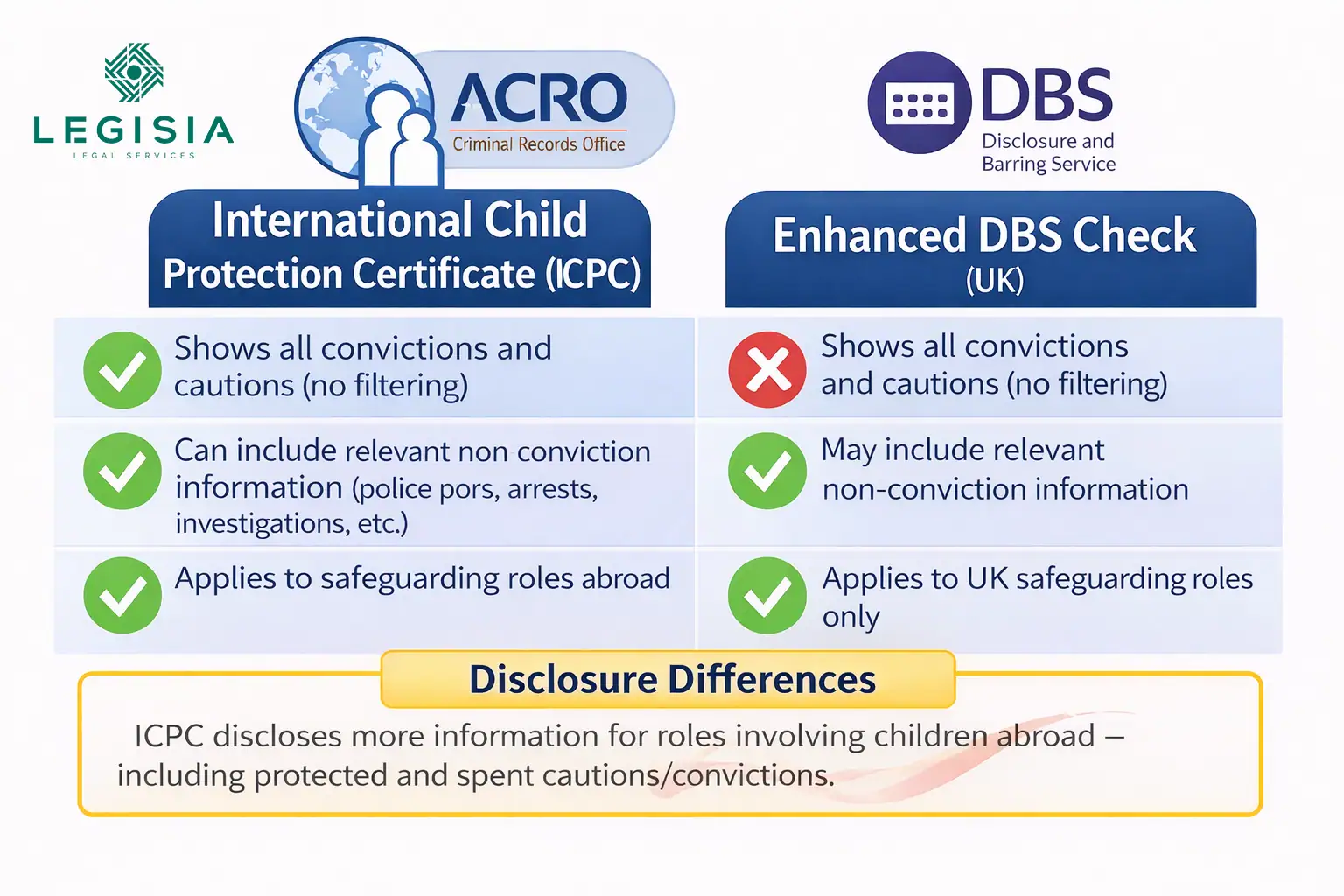
Disclosure Differences: ICPCs disclose all convictions and cautions without DBS filtering, and may include relevant non-conviction information for safeguarding roles abroad.
Frequently Asked Questions (ICPC Disclosure)
Does a spent caution show on an International Child Protection Certificate (ICPC)?
In most cases, yes. ICPCs do not operate the same filtering model as Enhanced DBS checks, so cautions that would be treated as spent (or filtered/protected) for domestic purposes will still be disclosed on an ICPC. If you are applying for work with children overseas and a caution could affect the outcome, it is often worth obtaining advice before you apply, so you understand what is likely to appear and what options exist to reduce disclosure risk.
Does an ICPC show protected cautions?
Potentially, yes. Even if a caution would not appear on an Enhanced DBS certificate due to filtering rules, an ICPC will still disclose it. This is why applicants are often caught out — a “clean” DBS outcome does not necessarily mean a clean ICPC outcome. If the caution is old, minor, or issued in circumstances you believe were unfair or procedurally flawed, you may have options to seek deletion from police records before applying.
Can arrest records appear on an ICPC?
They can. ICPCs may include relevant non-conviction information where police consider disclosure necessary and proportionate for safeguarding purposes. This can include arrests, allegations that did not result in charge, investigations, or other local police information. Disclosure is discretionary and should be based on safeguarding relevance, accuracy, and proportionality.
Where non-conviction information is disclosed unfairly or disproportionately, it may be possible to challenge the disclosure decision and/or pursue removal of the underlying information from police systems. Legisia can advise on the best route depending on whether the issue is the disclosure decision itself, the accuracy of the information, or the retention of the record.
What is the difference between an ICPC and an Enhanced DBS check?
An Enhanced DBS check applies statutory filtering rules and may remove certain old and minor cautions or convictions from disclosure. An ICPC does not apply DBS filtering in the same way and can disclose all cautions and convictions, as well as relevant non-conviction information where safeguarding considerations justify it. If your role is overseas and involves children, you should treat the ICPC as a separate and stricter disclosure system and plan accordingly.
Can I delete a caution before applying for an ICPC?
In some cases, yes. It may be possible to apply for deletion of a caution from police records where it was unlawfully issued, improperly administered, inaccurate, against the public interest or disproportionate. If a caution is deleted from the Police National Computer, it should not appear on an ICPC.
Legisia assists clients by assessing eligibility for deletion, preparing the evidence and legal submissions, and managing the process with the relevant police force. This is often best done before an ICPC is applied for, particularly where overseas employment depends on the outcome.
Can I challenge information disclosed on an ICPC?
Yes. If your ICPC contains information that is inaccurate, misleading, or disproportionate to any safeguarding risk, you may be able to request a formal review. Strong challenges usually focus on accuracy, relevance, necessity and proportionality — and are supported by clear evidence and structured legal representations.
Legisia can review the disclosure, advise on prospects, and prepare representations aimed at removing or amending the disclosed information. Where appropriate, we also advise on related record correction or deletion steps to reduce the risk of repeated disclosure in future.
How Legisia Can Help
Legisia advises individuals concerned about disclosure on an International Child Protection Certificate, particularly where cautions, convictions or non-conviction police information may affect overseas employment.
We provide:
- Assessment of likely ICPC disclosure risk before you apply
- Advice on the impact of cautions and convictions on safeguarding roles abroad
- Police caution and arrest record deletion applications
- Representations to challenge disproportionate or inaccurate disclosure
- Advice on removal or correction of non-conviction police information
Because ICPCs do not apply DBS filtering in the same way, early advice can be critical. In many cases, proactive steps taken before an application is submitted can materially reduce the risk of damaging disclosure.
If you are concerned about what may appear on your International Child Protection Certificate, contact us for confidential advice.
Share this Post, Choose your platform!

Matt is a Solicitor Advocate and Director of Legisia Legal Services. He specialises exclusively in police record deletion, DBS appeals, and regulatory defence. With over 20 years of experience, he has advised hundreds of professionals and individuals on high-stakes matters affecting careers, reputations, and legal standing. His work focuses on challenging unlawful data retention, safeguarding thresholds, and procedural breaches across UK policing and disclosure systems.
Matt is a Solicitor Advocate and Director of Legisia Legal Services. He specialises exclusively in police record deletion, DBS appeals, and regulatory defence. With over 20 years of experience, he has advised hundreds of professionals and individuals on high-stakes matters affecting careers, reputations, and legal standing. His work focuses on challenging unlawful data retention, safeguarding thresholds, and procedural breaches across UK policing and disclosure systems.

Can Local Police Records be Deleted?
Dec 28, 2022

US Immigration and Cannabis Criminal Records
Dec 17, 2020

Should I Accept a Police Caution?
Nov 7, 2020

Police Caution Removal Solicitor
Oct 24, 2020

The HCPC and Police Cautions
Oct 23, 2020