


- International Child Protection Certificates
-

 4 min read
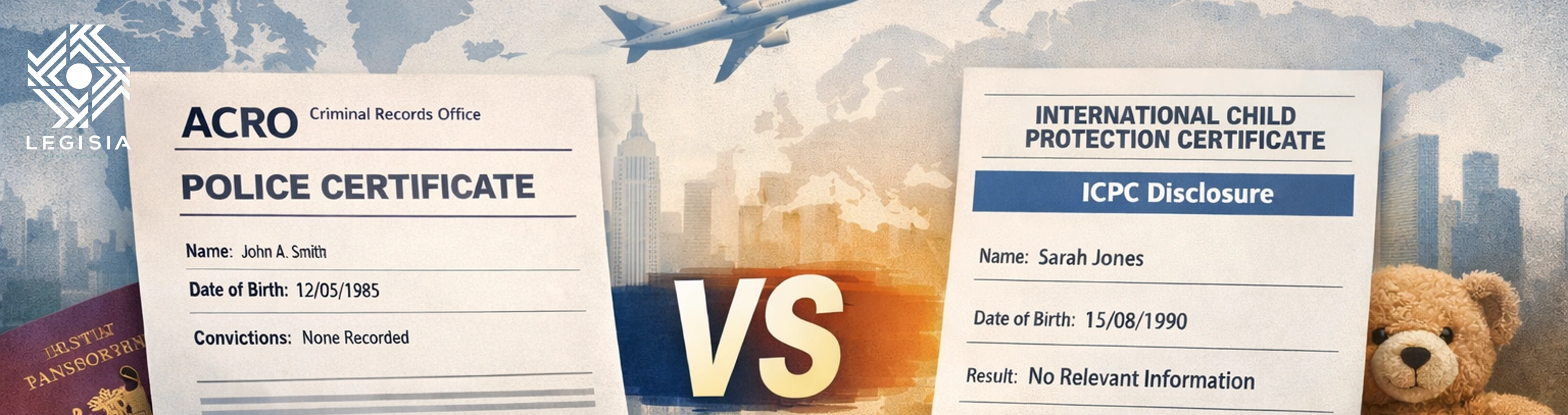




People applying for jobs overseas are often asked to obtain a police certificate. In many cases this leads to confusion between two different documents issued by ACRO: the International Child Protection Certificate (ICPC) and the ACRO Police Certificate.
Although both certificates relate to police records, they serve different purposes and are used in different situations.
What Is an International Child Protection Certificate?
The International Child Protection Certificate (ICPC) is designed specifically for individuals who are seeking employment overseas working with children.
The certificate is intended to support safeguarding decisions by employers outside the UK.
An ICPC may disclose:
- Convictions
- Police cautions
- Relevant non-conviction information
You can read a full explanation of how disclosure works in our guide to the International Child Protection Certificate and police information disclosure.
What Is an ACRO Police Certificate?
An ACRO Police Certificate is typically required for immigration, residency or visa applications.
It provides confirmation of whether an individual has convictions or cautions recorded on UK police systems.
Unlike ICPCs, these certificates are not specifically designed for safeguarding roles involving children.
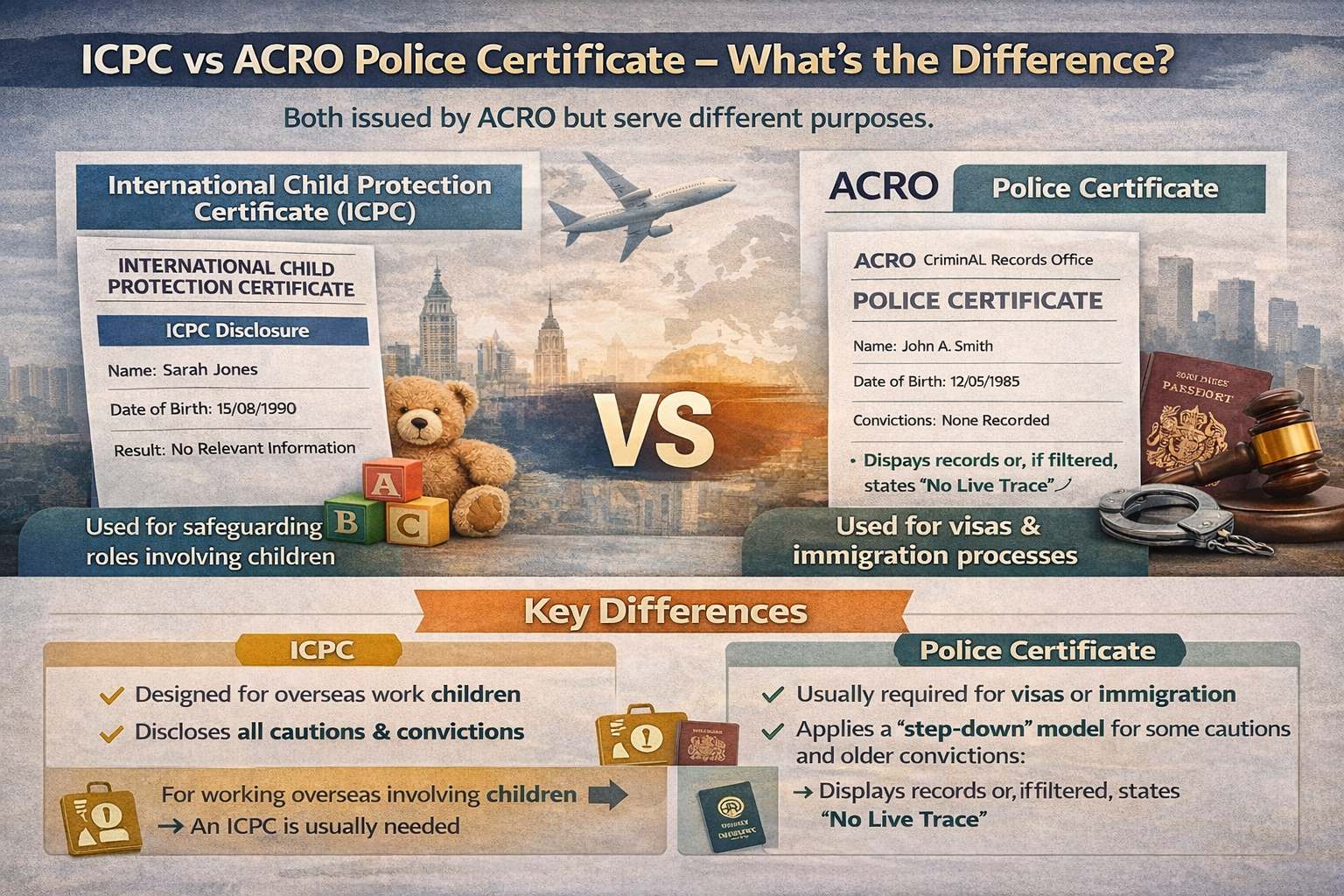
Key Differences Between an ICPC and Police Certificate
Although both certificates are issued by ACRO, they serve different purposes.
- ICPC: designed for overseas work involving children
- Police Certificate: usually required for immigration or visa applications
- ICPC: may disclose non-conviction information
- Police Certificate: generally focused on convictions
Which Certificate Do You Need?
The certificate you need depends on the purpose of the request.
If you are applying for a role overseas involving children, an employer will normally request an ICPC.
If you are applying for a visa or immigration process, the relevant authority may require an ACRO Police Certificate.
What If Your Record Contains Police Information?
If police records exist, the information disclosed may affect employment or immigration decisions.
For example, police cautions may appear on an ICPC even where they would not appear on a domestic DBS check.
Where this is a concern, it may sometimes be possible to apply for deletion of a caution before an ICPC application is submitted.
See our guide to deleting a police caution before an ICPC application.
How Legisia Can Help
Legisia advises individuals concerned about police records appearing on ICPC certificates and other disclosure checks.
- Advice on ICPC disclosure risks
- Applications to delete police cautions
- Challenges to discretionary disclosure
- Advice where overseas employment may be affected
If you are concerned about police records affecting an ICPC or other certificate, seeking advice early may help you understand the options available.
Concerned about what may appear on your ICPC?
If your International Child Protection Certificate could affect an overseas job offer, it may be sensible to take advice before submitting the certificate to an employer.
Legisia advises clients on police caution deletion, challenging ICPC disclosure, and addressing police records that may appear on safeguarding checks.
Frequently Asked Questions
Is an ICPC the same as an ACRO Police Certificate?
No. The two certificates serve different purposes. ICPCs are used for safeguarding roles involving children overseas, while Police Certificates are typically required for immigration or visa applications.
Does a police certificate show cautions?
Police Certificates can disclose cautions if they have not been “stepped down.” Minor offences are usually stepped down after 5 years, while more serious offences are stepped down after 10 years.
Once a record has been stepped down, the certificate will state “No Live Trace.” This means a record exists on the Police National Computer (PNC), but the details are not directly disclosed. The wording “No Live Trace” therefore acts as an indirect indication that stepped-down information exists.
If a person has no record at all on the PNC, the certificate will instead state “No Trace.”
If you want ACRO’s policy in more detail, including details about No Trace, No Live Trace and the step-down model, see our guide on police cautions on ACRO Police Certificates.
Which certificate do schools overseas require?
Schools recruiting teachers from the UK often request an International Child Protection Certificate (ICPC) because it is designed for safeguarding roles involving children. However, because teachers usually also need a visa to work overseas, immigration authorities typically require an ACRO Police Certificate as part of the visa application.
Share this Post, Choose your platform!

Matt is a Solicitor Advocate and Director of Legisia Legal Services. He specialises exclusively in police record deletion, DBS appeals, and regulatory defence. With over 20 years of experience, he has advised hundreds of professionals and individuals on high-stakes matters affecting careers, reputations, and legal standing. His work focuses on challenging unlawful data retention, safeguarding thresholds, and procedural breaches across UK policing and disclosure systems.
Matt is a Solicitor Advocate and Director of Legisia Legal Services. He specialises exclusively in police record deletion, DBS appeals, and regulatory defence. With over 20 years of experience, he has advised hundreds of professionals and individuals on high-stakes matters affecting careers, reputations, and legal standing. His work focuses on challenging unlawful data retention, safeguarding thresholds, and procedural breaches across UK policing and disclosure systems.
Disclosure & DBS: the complete CPD course for professionals
Written by a solicitor who handles these cases every day. For HR, compliance, safeguarding and legal professionals who make decisions about police records and DBS disclosures.
- Eleven modules covering disclosure, DBS checks, barring, regulatory interface and employment decisions
- The only UK course that also covers how UK records affect work, travel and employment abroad
- CPD-accredited, with written feedback on a final applied-scenario exercise
- Waitlist members get 20% off and a sample module ahead of launch
We'll email you the checklist and news about the course launch – nothing else. See the full course →


Will a Criminal Record Show on an ICPC?
Mar 4, 2026
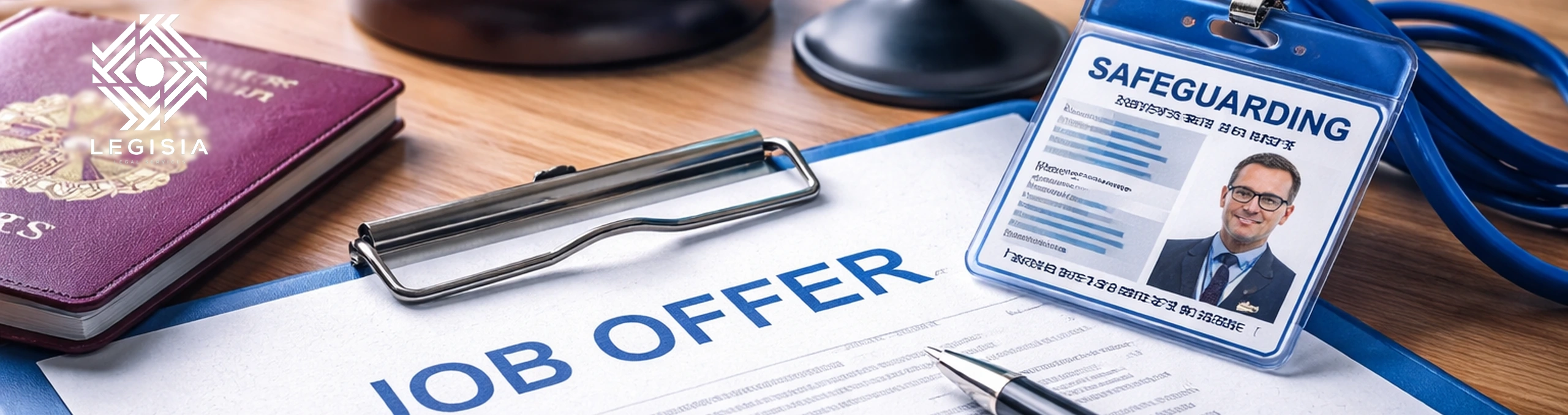
What Happens If Your ICPC Affects a Job Offer?
Mar 2, 2026

Can Non-Conviction Information Appear on an ICPC?
Feb 25, 2026

Deleting a Police Caution Before an ICPC Application
Feb 24, 2026

Will a Police Caution Show on an ICPC?
Feb 21, 2026
