-

 5 min read





Deleting a Police Caution Before an ICPC Application
If you are applying for an International Child Protection Certificate (ICPC) and you have previously received a police caution, it is critical to understand that the caution will be disclosed if it remains on the Police National Computer (PNC). Unlike an Enhanced DBS check, ICPCs do not apply the same filtering framework.
As explained in our guide to ICPC disclosure, cautions – even those that are spent or protected for domestic purposes – will appear if they are still recorded on the PNC.
In some cases, however, it may be possible to apply for deletion of the caution before submitting your ICPC application. Acting early can materially reduce the risk of damaging disclosure affecting overseas employment.
Why ICPC Disclosure Is Different
The ICPC is issued by ACRO for roles involving children overseas. It is designed specifically for safeguarding in international contexts. The disclosure threshold is therefore strict.
If a caution remains on police systems at the time of application, it will be disclosed. There is no automatic filtering mechanism equivalent to the DBS model.
This is why individuals are often surprised to receive a certificate disclosing matters they believed were “spent” or no longer relevant.
Understanding this distinction is essential before applying.
Why Deletion Should Be Considered Early
If overseas employment depends on a clean certificate, applying for deletion before submitting your ICPC application may be the most effective strategy.
Deletion removes the caution from the Police National Computer. If successful, it should not appear on the ICPC.
By contrast, waiting until after disclosure requires you to challenge the certificate itself – which can be more complex and less predictable.
The Legal Basis for Police Caution Deletion
Deletion is not automatic and is not granted simply because a caution is old. A formal application must be made to the relevant police force, usually supported by legal representations.
Common grounds include:
- The caution was unlawfully issued
- Procedural safeguards were not followed
- The admission was invalid or improperly obtained
- The offence was factually inaccurate
- Retention is disproportionate or against the public interest
Each application is fact-sensitive. Police forces will assess proportionality, public protection considerations, and the integrity of the original process.
Well-prepared applications that address these issues directly are significantly more persuasive than informal requests.
Timing Your ICPC Application
If you apply for an ICPC while a deletion request is pending, the caution will still be disclosed. Timing is therefore critical.
In many cases, it is advisable to resolve deletion first. Strategic timing can prevent unnecessary disclosure and avoid complications with employers or visa authorities.
Where deadlines are tight, tailored advice from an expert lawyer is particularly important.
Deletion vs Challenging ICPC Disclosure
There is an important distinction between deleting the underlying record and challenging disclosure after an ICPC has been issued.
Deletion removes the caution entirely from police systems. A disclosure challenge argues that information should not have appeared on a particular certificate.
Where deletion is possible, it is generally the more durable solution, as it reduces the risk of repeated disclosure in future applications.
If you have already received a certificate, see our detailed guidance on challenging ICPC disclosure.
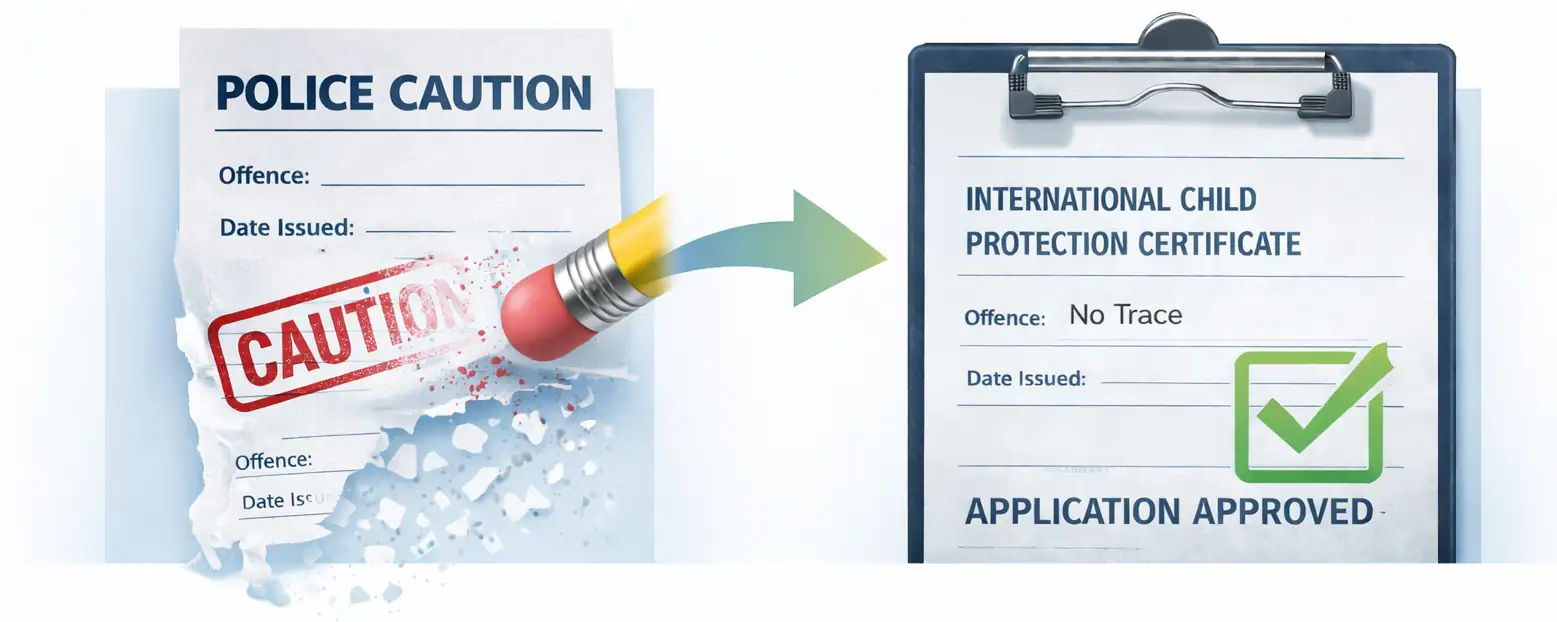
Removing a caution before applying can prevent automatic disclosure on an ICPC.
The Real-World Impact of ICPC Disclosure
ICPC disclosure can affect:
- Teaching contracts overseas
- International safeguarding roles
- NGO or charity appointments abroad
- Visa and immigration decisions linked to child-facing work
Even minor or historic cautions can raise safeguarding concerns in overseas jurisdictions unfamiliar with UK filtering concepts.
Proactive management of your record can therefore be critical.
How Legisia Supports Clients
Legisia advises individuals nationwide on police record deletion, particularly where ICPC disclosure may affect employment or international opportunities.
- Assessment of eligibility for deletion
- Review of police documentation
- Preparation of structured deletion representations
- Liaison with the relevant police force
- Strategic advice on ICPC timing
We focus on proportionality, procedural integrity and evidential analysis to maximise the prospects of a successful outcome.
If you are considering applying for an ICPC and have a caution on your PNC record, early advice can significantly change your position.
Key Takeaways
- If the caution remains recorded, it will be disclosed on an ICPC
- Deletion must be formally applied for
- Not all cautions are eligible for removal
- Timing is critical before submitting your ICPC application
Frequently Asked Questions
Will a deleted caution appear on an ICPC?
No. If a caution is successfully deleted from the Police National Computer, it should not appear on an International Child Protection Certificate.
Can old cautions be removed?
Age alone is not sufficient. Deletion depends on whether lawful grounds exist, including procedural irregularity or disproportionality.
How long does a deletion application take?
Timescales vary by police force and complexity. Applications commonly take several months.
Should I apply for my ICPC before deletion is resolved?
If the caution remains on record at the time of application, it will be disclosed. In most cases, it is preferable to resolve deletion first.
Contact Legisia
If you are concerned about a police caution affecting your International Child Protection Certificate, contact Legisia for confidential advice from an expert solicitor. Early action may materially improve your position, avoiding visa refusals or the loss of a job opportunity.
Share this Post, Choose your platform!

Matt is a Solicitor Advocate and Director of Legisia Legal Services. He specialises exclusively in police record deletion, DBS appeals, and regulatory defence. With over 20 years of experience, he has advised hundreds of professionals and individuals on high-stakes matters affecting careers, reputations, and legal standing. His work focuses on challenging unlawful data retention, safeguarding thresholds, and procedural breaches across UK policing and disclosure systems.
Matt is a Solicitor Advocate and Director of Legisia Legal Services. He specialises exclusively in police record deletion, DBS appeals, and regulatory defence. With over 20 years of experience, he has advised hundreds of professionals and individuals on high-stakes matters affecting careers, reputations, and legal standing. His work focuses on challenging unlawful data retention, safeguarding thresholds, and procedural breaches across UK policing and disclosure systems.