-

 5 min read





Can Non-Conviction Information Appear on an ICPC?
An International Child Protection Certificate (ICPC) does not only disclose convictions and cautions. It may also include non-conviction police information – such as arrests, allegations, investigations, or other locally recorded intelligence – where police consider disclosure necessary for safeguarding purposes.
This surprises many applicants, particularly those who have previously received a “clean” Enhanced DBS certificate. The key difference is that ICPCs are designed specifically for overseas child safeguarding roles, and the disclosure test can operate differently in practice.
If you are unfamiliar with the broader framework, see our guide to ICPC cautions and disclosure.
What Is Non-Conviction Information?
Non-conviction information refers to police-held material that did not result in a conviction. This can include:
- Arrests where no charge followed
- Allegations that were not proven
- Investigations resulting in no further action
- Local police intelligence reports
- Safeguarding concerns recorded by a police force
This material is often retained on local police systems even where no prosecution occurred.
Is This Similar to “Relevant Information” on an Enhanced DBS?
Yes. The disclosure of non-conviction information on an ICPC is conceptually similar to the inclusion of “relevant information” on an Enhanced DBS certificate.
On an Enhanced DBS check, a Chief Officer may include additional information if it is considered relevant and proportionate to the role applied for. The same safeguarding-based reasoning can apply to ICPC disclosure decisions.
However, applicants sometimes assume that because no “relevant information” appeared on a previous DBS certificate, nothing will appear on an ICPC. That assumption can be risky.
If you are concerned about discretionary disclosure on a DBS certificate, see our guidance on relevant information on Enhanced DBS certificates.
How Local Police Records Come Into Play
Non-conviction disclosure on an ICPC often originates from local police records rather than national conviction databases.
Police forces retain a wide range of locally recorded material, including:
- Incident logs
- Intelligence reports
- Safeguarding referrals
- Allegations recorded but not charged
Even where a matter resulted in no further action, it may still be retained on local systems and considered during ICPC assessment.
If you are unsure what information may be held locally, you may wish to review our guidance on local police records.
Why Can Non-Conviction Information Be Disclosed?
ICPC decisions are made through a safeguarding lens. Where police consider information relevant to protecting children in an overseas role, they may include it on the certificate.
The core considerations typically include:
- Accuracy of the information
- Safeguarding relevance
- Necessity of disclosure
- Proportionality in light of the circumstances
Disclosure is not automatic, but it is discretionary.
Arrests, Allegations and Investigations – Does the Outcome Matter?
Yes – but not always in the way applicants expect.
An isolated arrest many years ago with no supporting evidence is very different from repeated safeguarding concerns recorded by police. Context, credibility, and recency all matter.
However, the absence of a conviction does not automatically prevent disclosure on an ICPC.
Impact on Overseas Employment
Many overseas employers are unfamiliar with UK disclosure nuance. A disclosed allegation – even where unproven – can raise safeguarding concerns in visa processes or employment decisions.
This is why early, strategic advice can be critical.
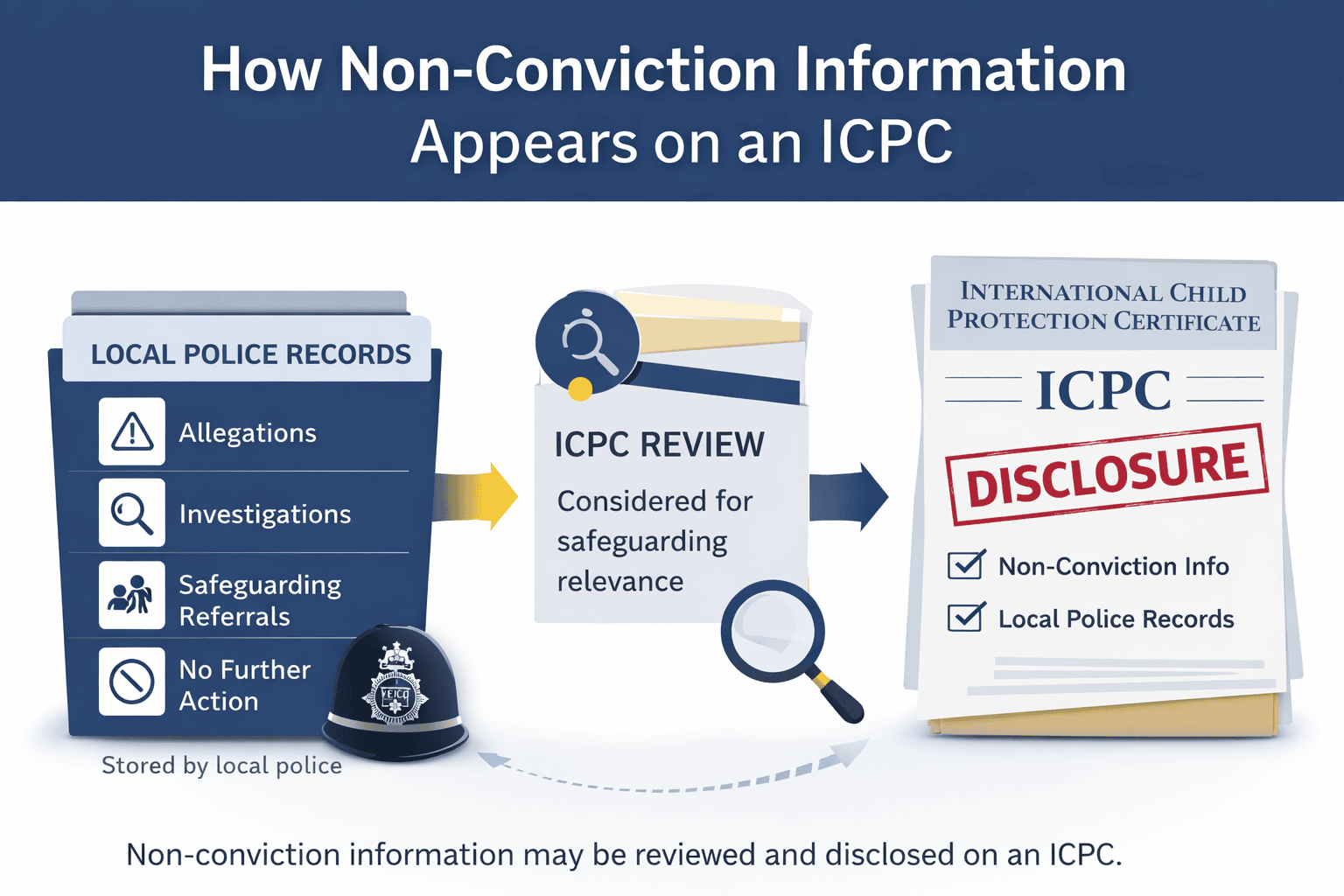
ICPC Non-Conviction Disclosure: Local police records may be reviewed for safeguarding relevance and disclosed where considered necessary and proportionate.

Non-conviction information may be disclosed where considered relevant and proportionate for safeguarding purposes.
Can Non-Conviction Disclosure Be Challenged?
Yes. Strong challenges usually focus on:
- Factual inaccuracies
- Material context omitted from the disclosure
- Lack of safeguarding relevance
- Disproportionate weight given to weak or historic allegations
Where the underlying information itself is inaccurate or unfairly retained, correction or deletion of local police records may also need to be considered.
For a detailed overview of structured challenge strategies, see challenging ICPC disclosure decisions.
How Legisia Can Help
Legisia advises clients who are concerned about arrests, allegations, investigations or local police intelligence appearing on their ICPC.
- Assessment of whether disclosure was justified
- Structured representations focused on proportionality and safeguarding relevance
- Advice on correcting or removing inaccurate local police records
- Strategic planning before future ICPC applications
If your overseas employment depends on a clean certificate, proactive action can materially improve your position.
Frequently Asked Questions
Can an arrest with no charge appear on an ICPC?
Yes. Arrests may be disclosed where police consider the information relevant and proportionate for safeguarding purposes.
Is non-conviction information the same as relevant information on an Enhanced DBS?
Conceptually, yes. Both involve discretionary disclosure based on safeguarding relevance and proportionality.
Can I remove inaccurate local police records?
In some cases. Where information is inaccurate, misleading or unfairly retained, correction or deletion applications may be possible.
Does non-conviction information always get disclosed?
No. Disclosure is discretionary and must be justified as necessary and proportionate for safeguarding purposes.
Speak to Legisia
If you are concerned about non-conviction police information appearing on your ICPC, contact Legisia for confidential advice. We can assess your position and advise on the most effective route forward.
Share this Post, Choose your platform!