


- International Child Protection Certificates
-

 6 min read





If you are applying to work or volunteer with children overseas, you may be asked to obtain an International Child Protection Certificate (ICPC) from the ACRO Criminal Records Office.
For many applicants, the real concern is not the application itself, but whether a police caution will appear on the certificate.
Will a police caution show on an ICPC?
Yes. If a police caution remains recorded on police systems, it will be disclosed on an ICPC. That is why applicants are often surprised to find that a caution will still appear even where the position on a domestic Enhanced DBS check looks different.
Quick summary:
- Police cautions will show on an ICPC if they remain on police systems.
- Spent or protected cautions can still be disclosed on an ICPC.
- An ICPC and an Enhanced DBS certificate do not work in the same way.
- In some cases, deletion before applying can prevent the caution from appearing at all.
What Is an International Child Protection Certificate?
An International Child Protection Certificate (ICPC) is issued by ACRO for people seeking work or voluntary roles with children overseas. It is a safeguarding-focused certificate used by overseas employers and organisations who do not have direct access to UK police record systems.
For official guidance on the certificate itself, see ACRO’s International Child Protection Certificate guidance.
Will a Police Caution Show on an ICPC?
Yes. If a caution remains recorded on police systems at the time of the application, it will be disclosed on an ICPC.
This is the point that catches many applicants out. A caution may feel old, minor or no longer important, but that does not stop it appearing on an ICPC. In practical terms, you should assume that a caution will be disclosed unless it has been successfully deleted first.
If your concern is broader than cautions alone, see our guide on what can appear on an ICPC.
Do Spent or Protected Cautions Still Show?
Yes. A police caution can still be disclosed on an ICPC even where the position would look more favourable on a domestic DBS certificate.
This is one of the most important differences between domestic safeguarding checks and overseas safeguarding disclosure. People often assume that if a caution is old, spent or filtered for one purpose, it will no longer matter at all. That assumption is risky with respect of ICPCs.
If your situation involves a historical caution, the better question is usually not whether it feels old, but whether it is still held on police systems and whether there are grounds to seek deletion before the certificate is applied for.
ICPC vs Enhanced DBS – Why the Outcome Can Be Different
An Enhanced DBS certificate and an ICPC are not the same thing, even where both relate to safeguarding work.
- Enhanced DBS: domestic safeguarding check for roles in the UK.
- ICPC: safeguarding certificate for overseas work or volunteering with children.
- Enhanced DBS: may lead to a different disclosure outcome.
- ICPC: will still disclose cautions that applicants assumed would no longer matter.
This is why someone can be caught out by an ICPC after looking only at the DBS position. If you need the domestic position explained properly, read our guide on whether police cautions show on an Enhanced DBS check.
Can You Delete a Caution Before Applying for an ICPC?
In some cases, yes.
If a caution was wrongly issued, improperly administered, inaccurate, or otherwise open to challenge under the Record Deletion Process, it may be possible to apply for deletion from the Police National Computer before you apply for the certificate.
If deletion is successful first, the caution should not then appear on the ICPC.
That is why timing matters. In many cases, it is better to assess deletion before applying rather than waiting for the certificate to be issued and then trying to deal with the consequences afterwards.
See our more detailed guide on deleting a police caution before an ICPC application.
Can You Challenge ICPC Disclosure?
Yes, but the correct challenge depends on the real problem.
If the issue is that a caution should never have remained on police systems in the first place, the better route may be to address the underlying record. If the problem is that an ICPC has already disclosed information unfairly, inaccurately or disproportionately, it may be possible to request a formal review of the disclosure.
Where the concern relates to other police information beyond cautions, read our guide on non-conviction information on an ICPC.
Key Takeaways
- A police caution will appear on an ICPC if it remains on police systems.
- An ICPC can produce a different outcome from an Enhanced DBS certificate.
- Old, spent or apparently minor cautions can still create overseas safeguarding problems.
- In some cases, deletion before applying is the best way to reduce disclosure risk.
Visual Comparison – ICPC vs Enhanced DBS Disclosure
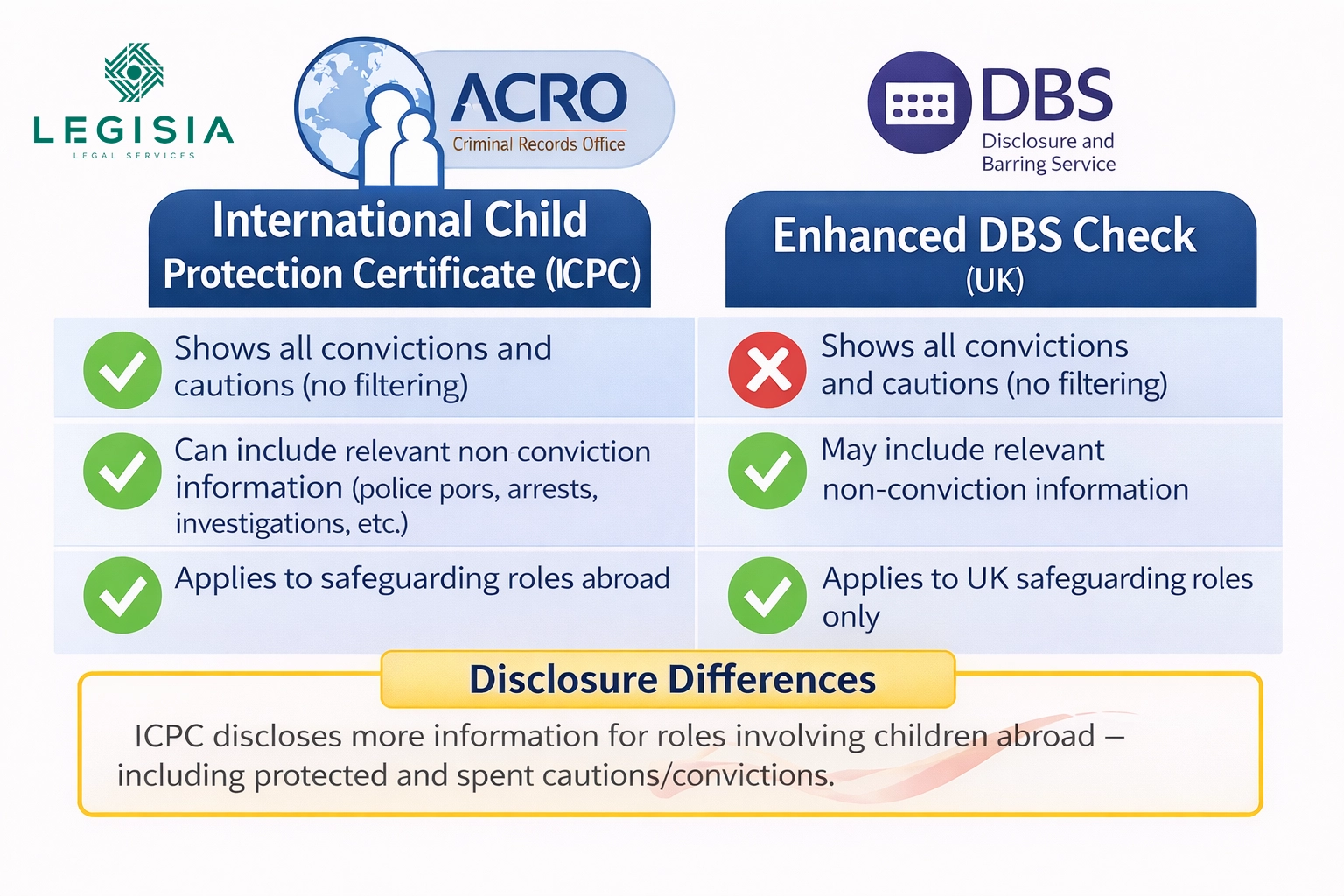
Disclosure Differences: An ICPC will disclose cautions that remain on police systems, even where the domestic DBS position may look different.
Frequently Asked Questions
Does a police caution show on an International Child Protection Certificate (ICPC)?
Yes. If the caution remains on police systems, it will be disclosed on an ICPC. That is why applicants should assess the record position carefully before applying.
Does a spent or protected caution still matter for an ICPC?
Yes. A caution can still create problems in the ICPC context even where the domestic DBS position looks more favourable.
Can I delete a caution before applying for an ICPC?
In some cases, yes. If there are proper legal grounds to challenge the caution under the Record Deletion Process, deletion before the application may prevent it from appearing on the certificate.
Can I challenge information already disclosed on an ICPC?
Yes. If the certificate contains information that is inaccurate, unfair or disproportionate, it may be possible to request a review. The correct strategy depends on whether the problem is the disclosure decision itself or the underlying police record.
Concerned about what may appear on your ICPC?
If a police caution could affect an overseas safeguarding role, it is often better to take advice before the certificate is submitted or, in some cases, before it is even applied for.
Legisia advises on police caution deletion, ICPC disclosure issues, and wider police record problems affecting overseas work.
How Legisia Can Help
Legisia advises individuals whose police cautions or related police records may affect an International Child Protection Certificate.
We can help by:
- assessing whether a caution is likely to cause problems on an ICPC;
- advising whether deletion should be explored before the application is made;
- preparing police caution deletion applications where proper grounds exist;
- advising on the right next step where disclosure has already happened.
If you are worried about a caution appearing on an ICPC, our police caution removal service can assess whether there is a realistic basis to act before disclosure causes damage.
Share this Post, Choose your platform!

Matt is a Solicitor Advocate and Director of Legisia Legal Services. He specialises exclusively in police record deletion, DBS appeals, and regulatory defence. With over 20 years of experience, he has advised hundreds of professionals and individuals on high-stakes matters affecting careers, reputations, and legal standing. His work focuses on challenging unlawful data retention, safeguarding thresholds, and procedural breaches across UK policing and disclosure systems.
Matt is a Solicitor Advocate and Director of Legisia Legal Services. He specialises exclusively in police record deletion, DBS appeals, and regulatory defence. With over 20 years of experience, he has advised hundreds of professionals and individuals on high-stakes matters affecting careers, reputations, and legal standing. His work focuses on challenging unlawful data retention, safeguarding thresholds, and procedural breaches across UK policing and disclosure systems.
Disclosure & DBS: the complete CPD course for professionals
Written by a solicitor who handles these cases every day. For HR, compliance, safeguarding and legal professionals who make decisions about police records and DBS disclosures.
- Eleven modules covering disclosure, DBS checks, barring, regulatory interface and employment decisions
- The only UK course that also covers how UK records affect work, travel and employment abroad
- CPD-accredited, with written feedback on a final applied-scenario exercise
- Waitlist members get 20% off and a sample module ahead of launch
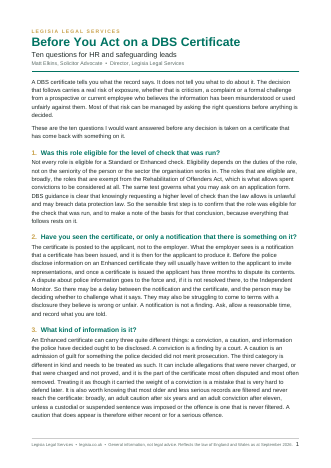
We'll email you the checklist and news about the course launch – nothing else. See the full course →


Will a Criminal Record Show on an ICPC?
Mar 4, 2026

What Happens If Your ICPC Affects a Job Offer?
Mar 2, 2026

Can Non-Conviction Information Appear on an ICPC?
Feb 25, 2026

Deleting a Police Caution Before an ICPC Application
Feb 24, 2026
